The short version
Access isn't alignment: an agent with valid credentials can still act outside its task, so check what it intends to do, not only who it is.
Declare the plan before any tool runs, then hold every action to it: out-of-scope steps are blocked and every decision is logged.
Useful agents live inside real workflows, connected to the systems you already run, with a person in the loop before anything sensitive.
Building is getting fast: describe an app in plain words and agents can design, code and ship it.
The faster agents build and act, the earlier the guardrails need to go in.
What happened
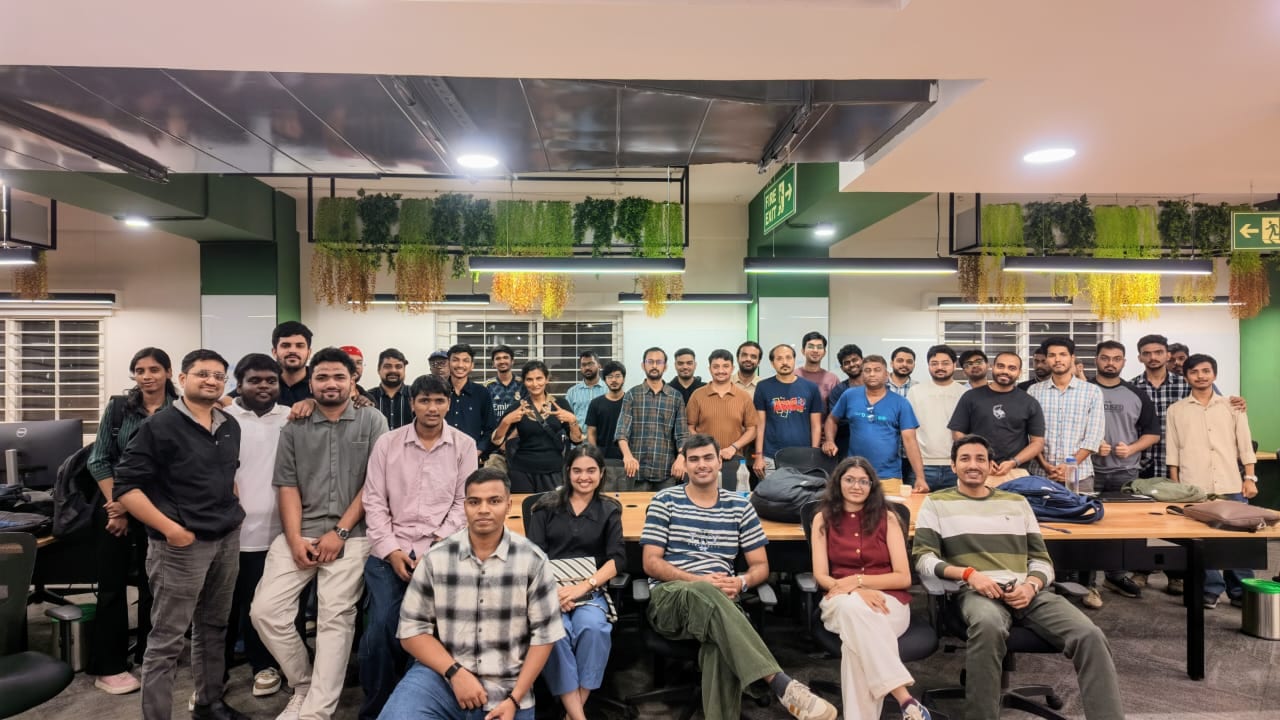
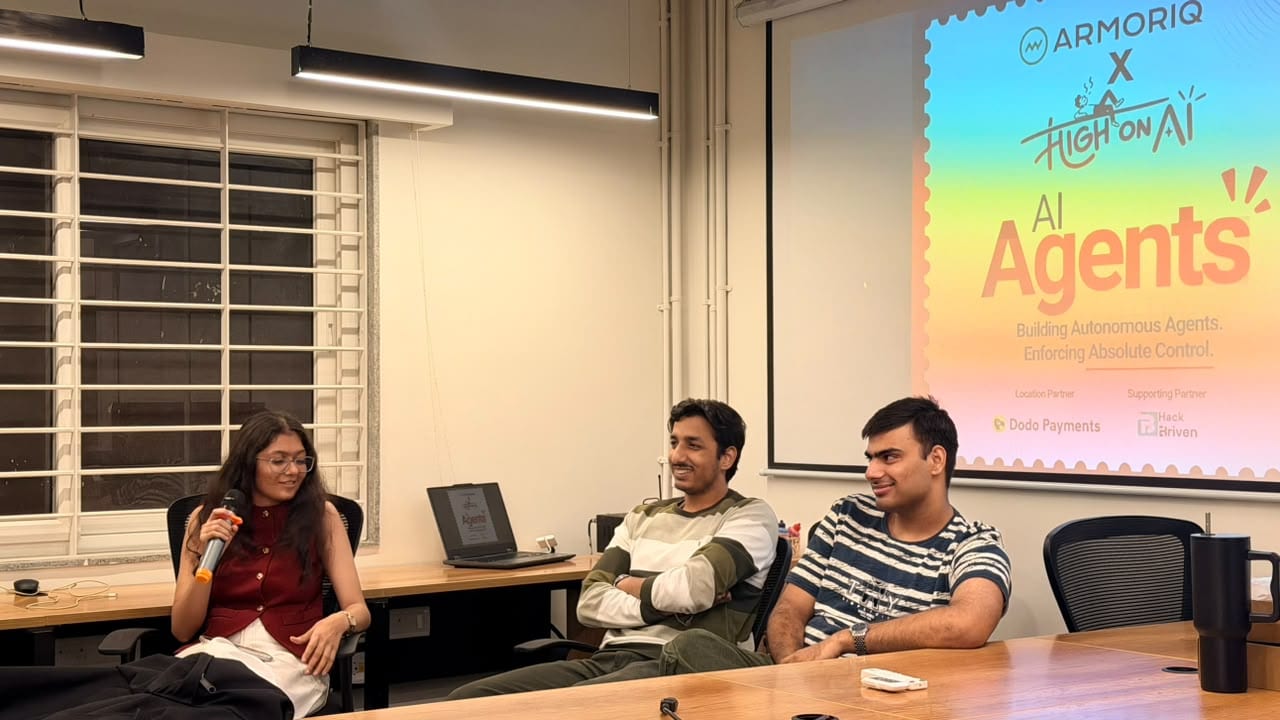
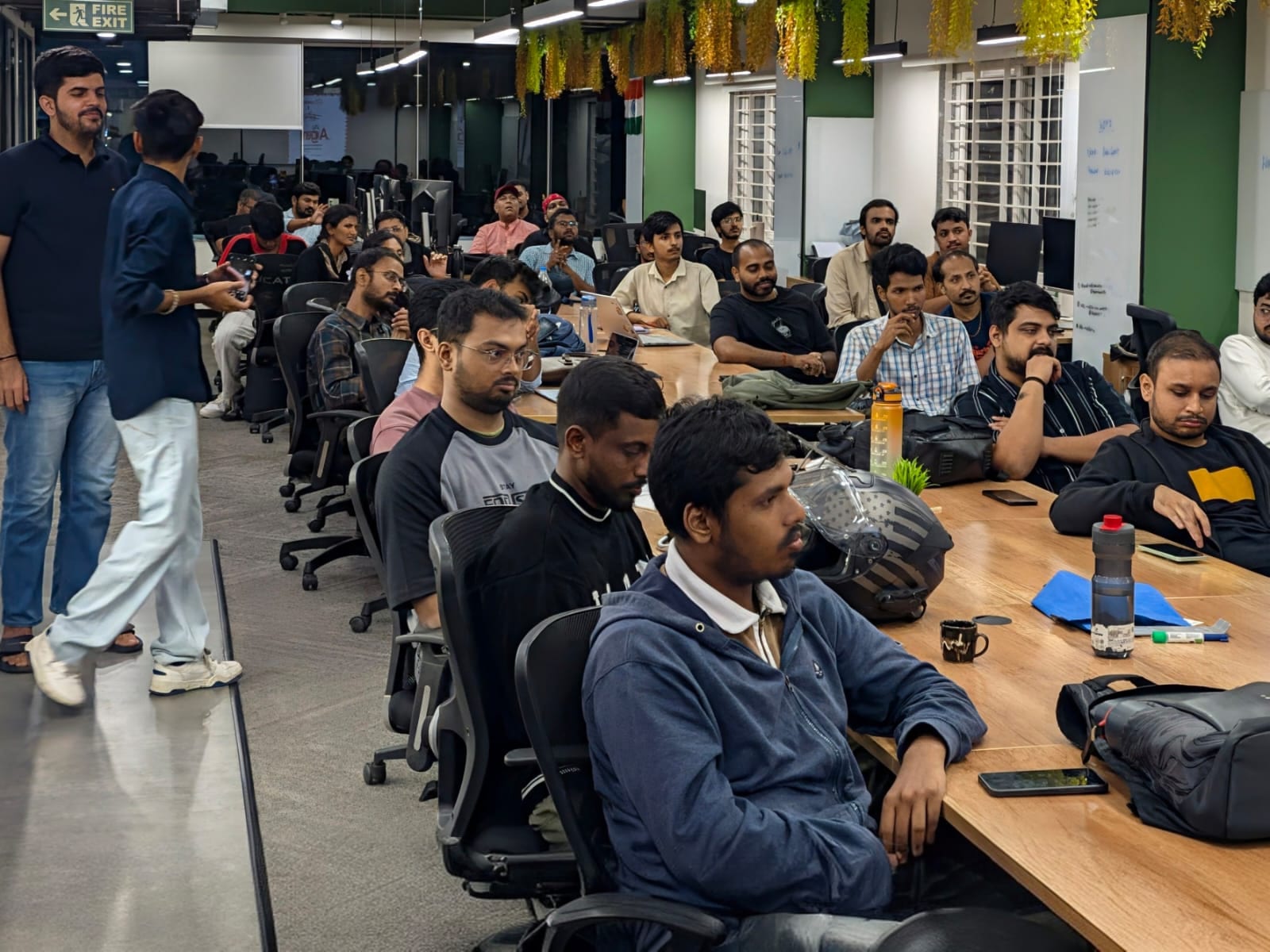
HighOnAI's first event, AI Agents, ran with ArmorIQ at Dodo Payments in Bengaluru on 17 October. The theme was right there on the poster: building autonomous agents, enforcing absolute control. Three sessions took it from both sides: how to keep agents in check, and how to put them to work.
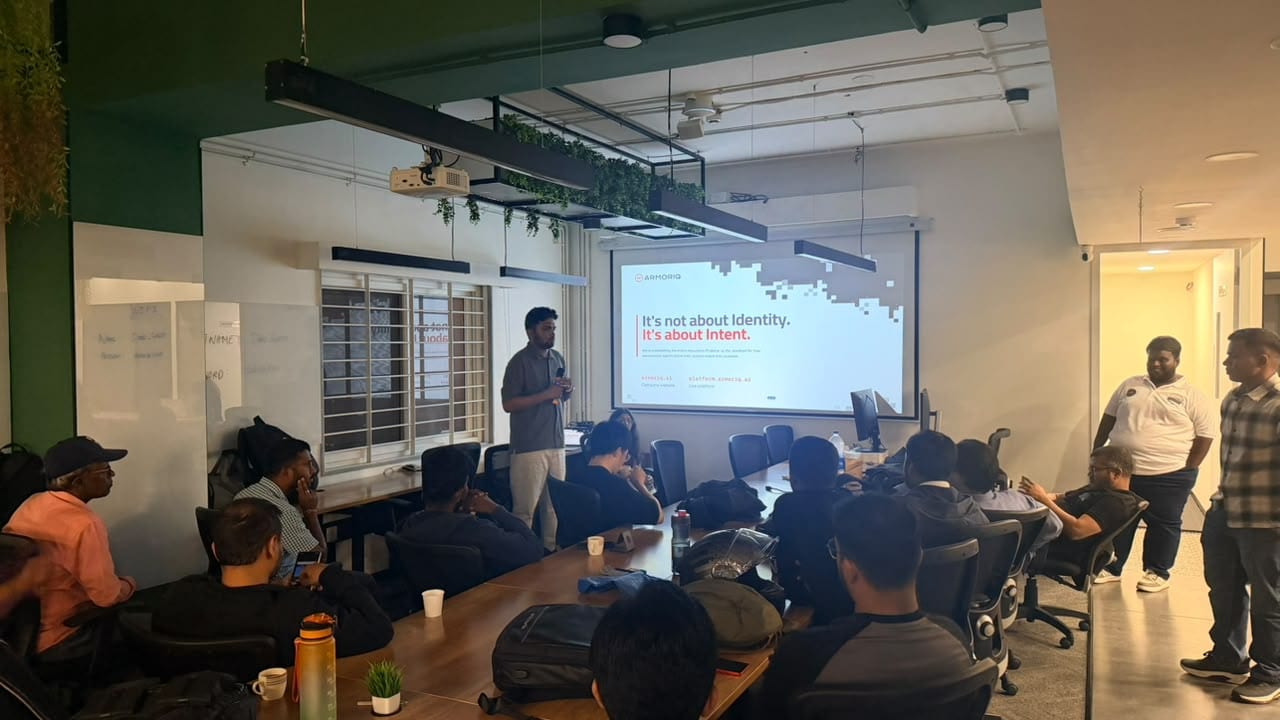
ArmorIQ: it's not about identity, it's about intent
ArmorIQ's CTO opened with the problem the company is built around. Most security for agents asks who the agent is: its keys, its credentials, its access. But an agent can be fully authenticated and still do something nobody asked it to. ArmorIQ's way of putting it: authenticated doesn't mean aligned.
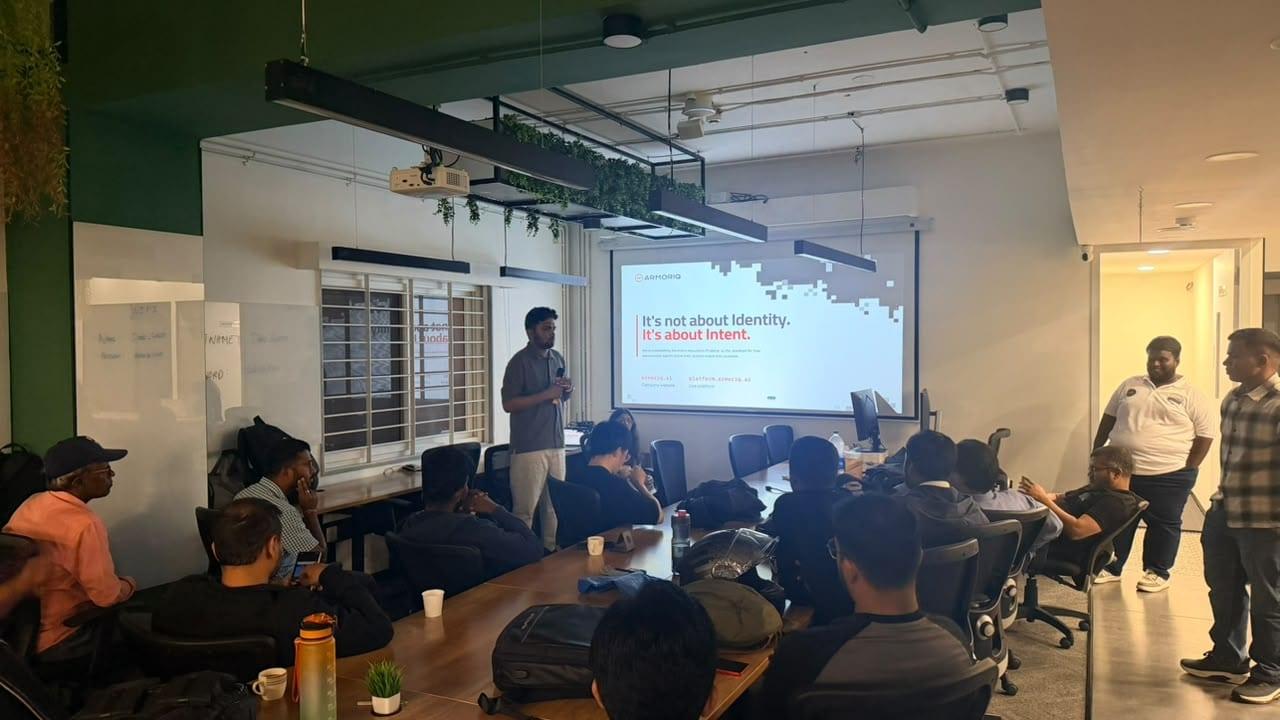
Their answer is intent assurance. Before any tool runs, the agent's plan is captured and cryptographically signed, and each action is then checked against that plan. Their example: an agent asked to summarise emails has no business reading a calendar or billing data, so that step gets blocked. Every allow, block and escalation goes into a tamper-evident audit log.
What the platform covers:
- Capture and enforce intent: the plan is declared and signed before anything runs.
- Policy and ownership: org-level policy, and a registry of agents with owners and the resources each may reach.
- One view of every agent: each action, in real time, in one dashboard.
- Audit trails mapped to SOC 2, GDPR and NIST.
- ArmorClaw, the open-source piece, bringing intent assurance to OpenClaw agents.
The way they frame it: guardrails check what an agent says and IAM checks who it is, while ArmorIQ checks what it's about to do. It's an extra layer, not a replacement for either. More at armoriq.ai.
DronaHQ: agents inside real workflows
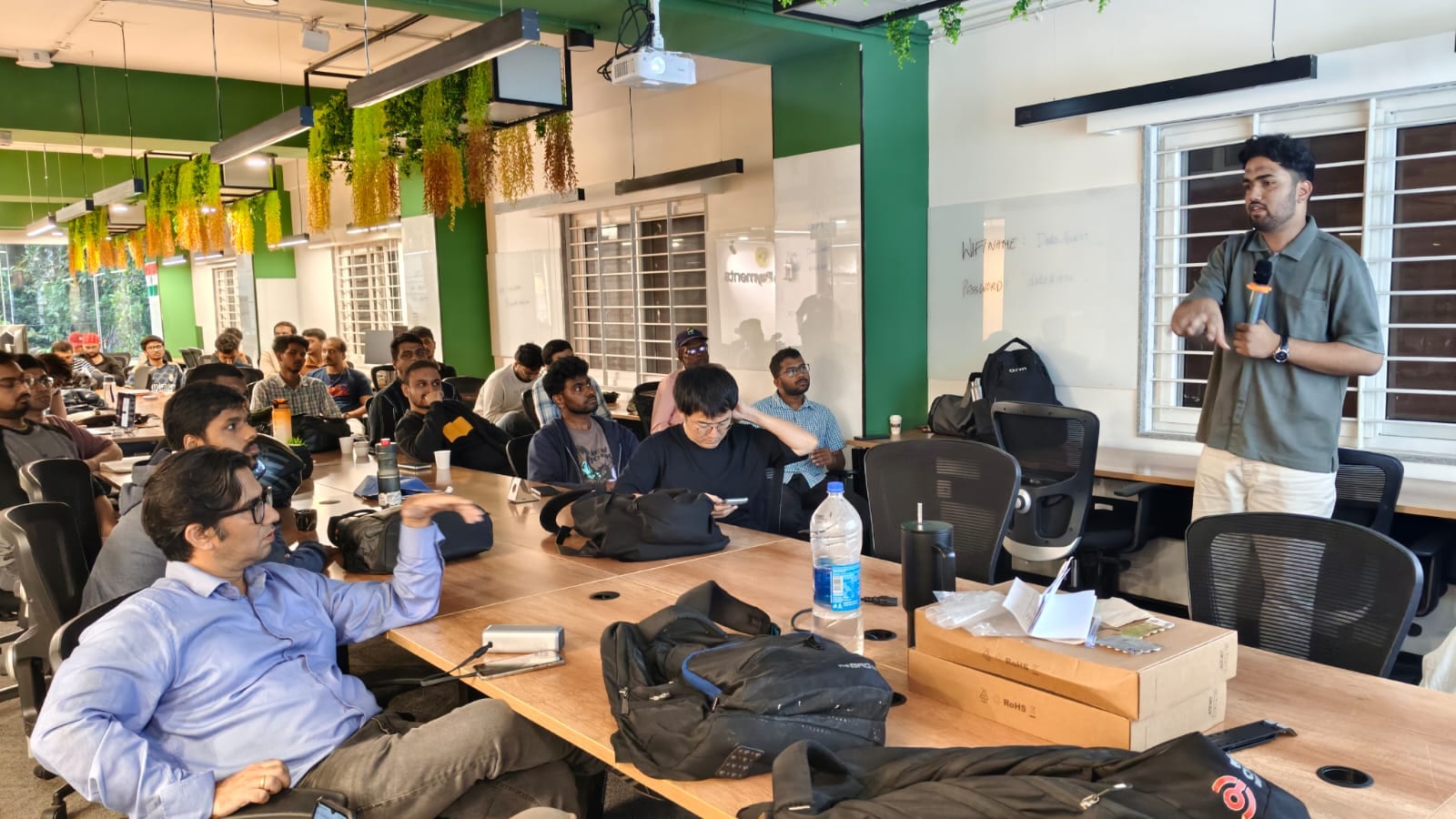
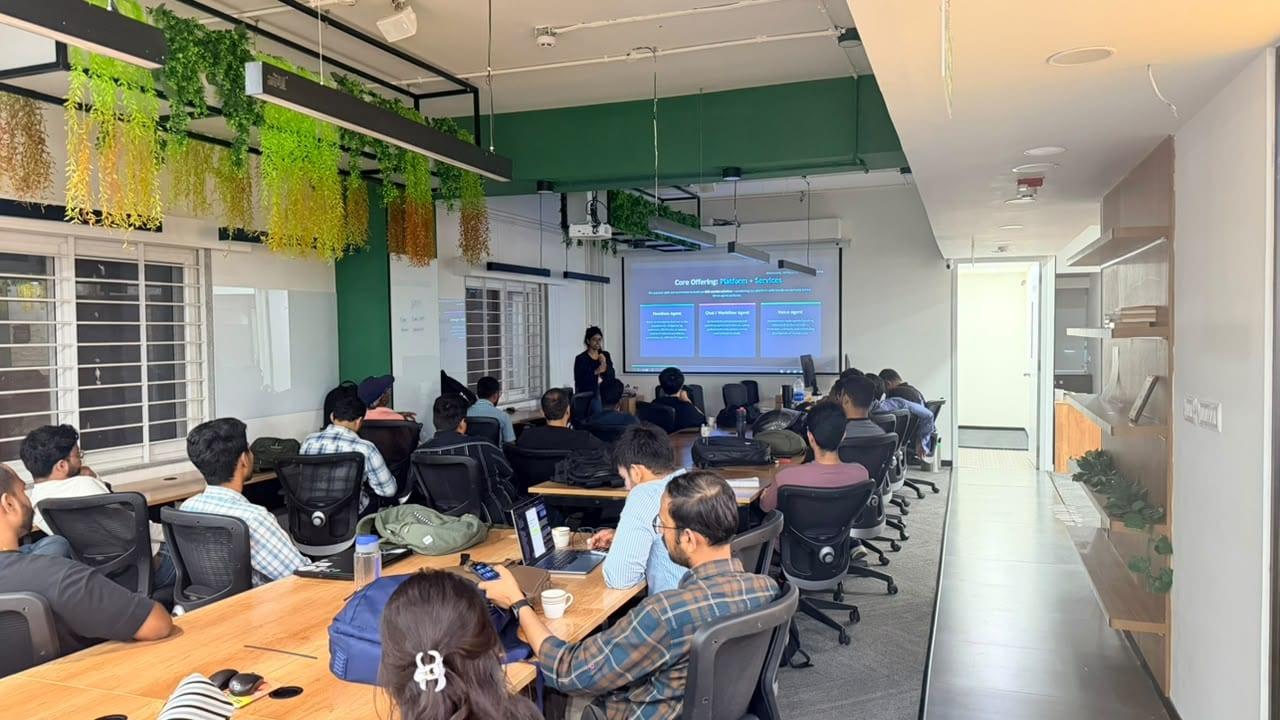
Next up was DronaHQ, the low-code platform teams use to build internal apps, which now builds agents too. Their idea of a useful agent is one built around your own processes: it calls the systems you already run, like your ERP, CRM, databases and APIs, and checks with a person before anything sensitive.
- Agent Builder for agents shaped around your processes, with sub-agents and search over your own documents.
- Guardrails with tracing, and any LLM underneath.
- Wherever people already are: chat, voice, WhatsApp, email, or headless through an API.
- The governance enterprises ask for: single sign-on, role-based access, a secrets vault and audit trails.
It made a good pair with the first talk: one session on what an agent should be allowed to do, one on putting agents to work where the work already happens. More at dronahq.com.
Fireside chat: Emergent, ArmorIQ and the room
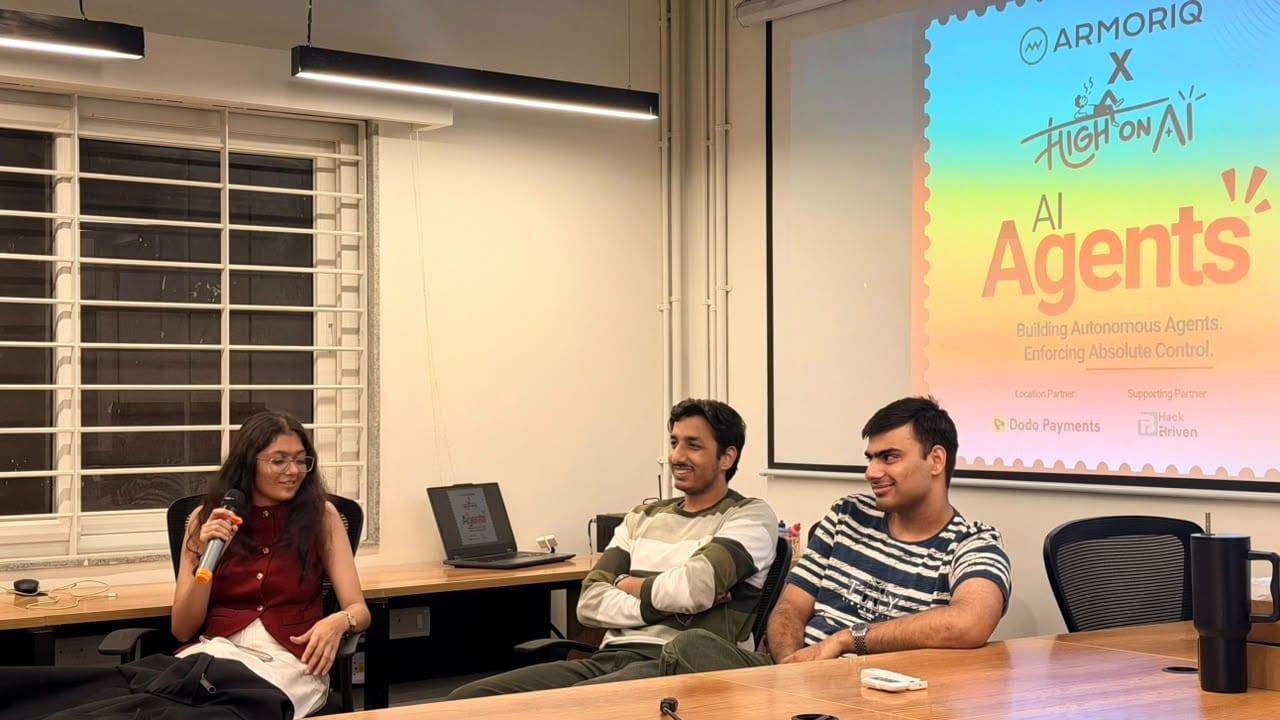
The evening closed with a fireside chat between Emergent, ArmorIQ and the HighOnAI community. Emergent builds the other half of the story: describe an app in plain words, and its agents design, code and deploy it, with the code yours to export to GitHub. More at emergent.sh.
Put next to ArmorIQ's talk, that's the evening's theme in a single conversation: agents that build and act fast, and the controls that make them safe to trust.
Thank you
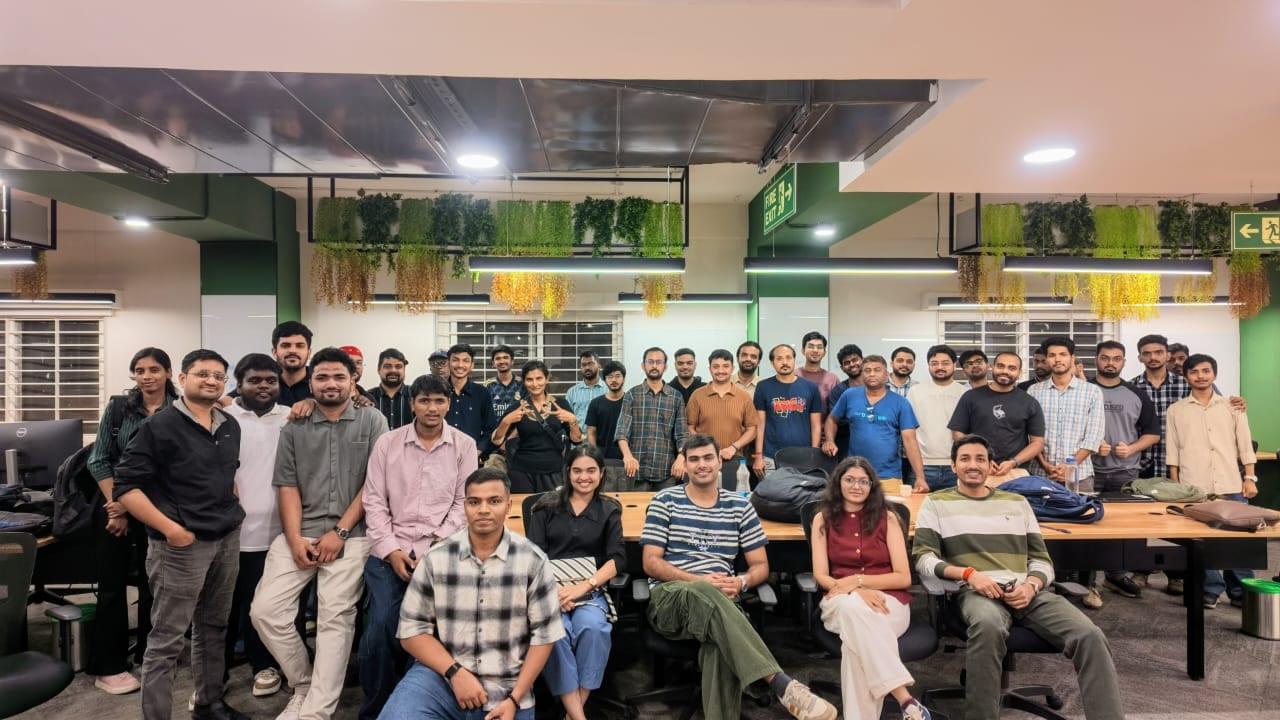
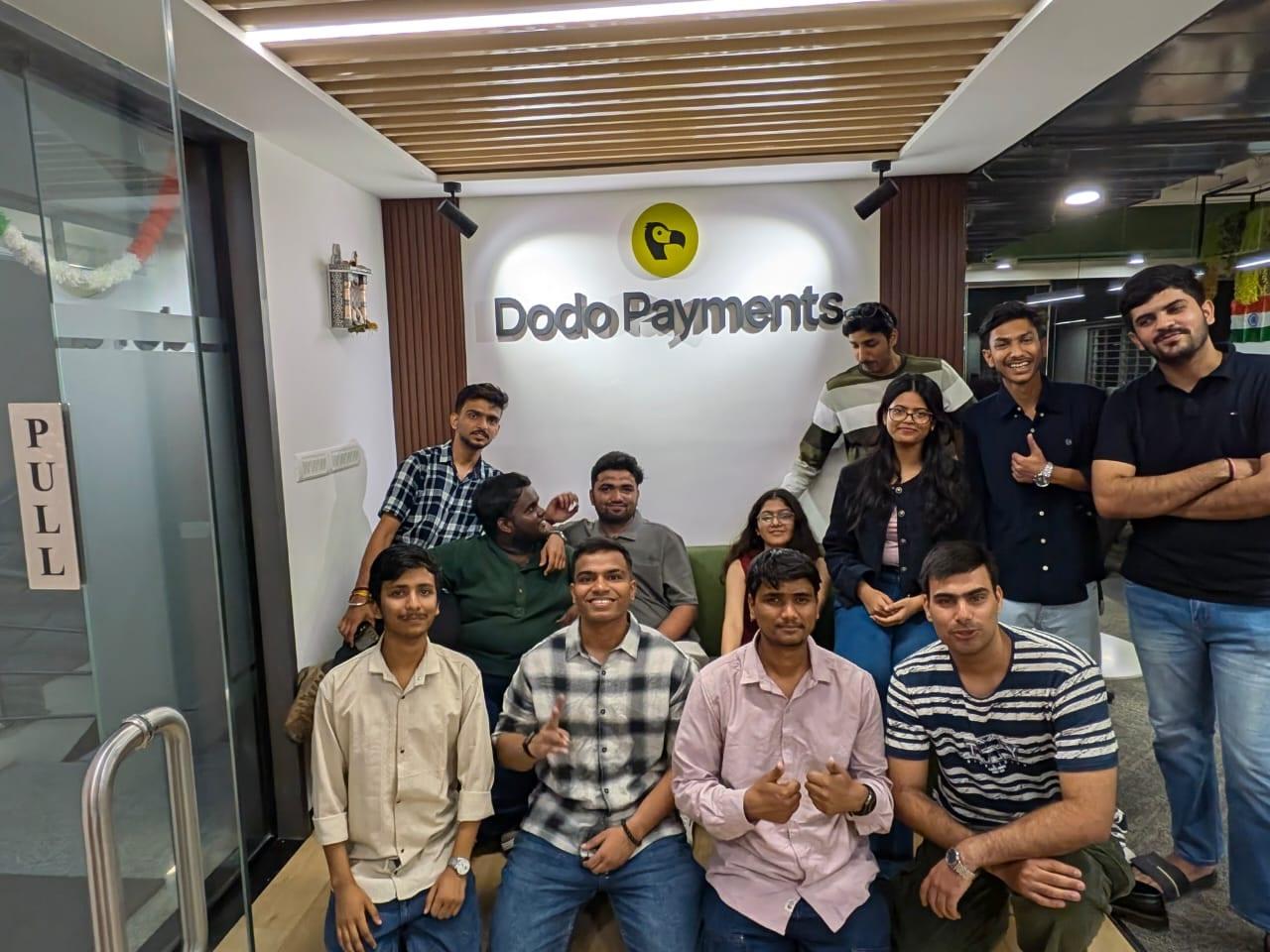
Thanks to ArmorIQ for partnering on our first event, to Dodo Payments for the space, to DronaHQ and Emergent for joining in, and to everyone who came and stayed for all three sessions. See you at the next one.
Resources
Everything that was shared in the room.